English
Feed Grade Zeaxanthin: Grade Selection, QA Checklist & Supply Options
Created on 03.16
We all want the best for our livestock because healthy animals produce better results. Adding natural pigments to their diet is a smart way to boost quality and visual appeal for consumers.
High-quality nutritional additives are key for modern farming. These antioxidants do more than just add color; they support overall animal wellness and vitality in every flock.
feed grade zeaxanthin
Using zeaxanthin for animal feed ensures that products like egg yolks look vibrant and fresh. Finding the right source can feel overwhelming with so many different options available in the market today.
We created this guide to help us navigate quality checklists and supply choices with complete confidence. Let’s explore how to choose the best ingredients to keep our livestock thriving and our customers happy.
Key Takeaways
- Enhances natural pigmentation in poultry and aquatic species.
- Supports overall health through powerful antioxidant properties.
- Improves consumer appeal for eggs and meat products.
- Requires strict quality assurance for optimal safety.
- Reliable supply chains ensure consistent production results.
- Proper selection leads to higher livestock market value.
1. Understanding Zeaxanthin in Animal Nutrition
Zeaxanthin is a key player in animal nutrition. It helps keep livestock healthy. This carotenoid is essential for many animal species.
What Is Zeaxanthin and How Does It Work?
Zeaxanthin is a carotenoid with antioxidant properties. It's found in plants and microorganisms. In animal feed, it boosts the health and quality of livestock products.
When animals eat zeaxanthin, it spreads through their bodies. It protects cells from damage by free radicals. This improves their health and productivity.
The Role of Carotenoids in Livestock Health
Carotenoids, like zeaxanthin, are vital for livestock health. They color animal tissues and products. They also protect against diseases with their antioxidant properties.
"Carotenoids are essential for animal health, contributing to the coloration of skin, egg yolks, and meat, as well as providing antioxidant benefits."
A table summarizing the roles of carotenoids in livestock health is provided below:
Role | Description | Benefit |
Pigmentation | Responsible for the coloration of skin, egg yolks, and meat | Enhances product appearance and market value |
Antioxidant Properties | Protects cells from oxidative stress | Improves overall health and productivity |
Immune System Support | Supports immune function | Reduces disease incidence |
Why Feed Grade Specifications Matter
The quality of zeaxanthin in animal feed is crucial. Feed grade specifications ensure it's safe and effective. These standards include purity levels and regulatory compliance.
Key specifications include purity levels, concentration standards, and compliance with regulatory requirements. Meeting these standards is essential for zeaxanthin's benefits and safety.
2. Benefits of Feed Grade Zeaxanthin for Your Livestock
Feed grade zeaxanthin is a valuable supplement for livestock. It enhances egg yolk pigmentation and improves overall health. By adding this carotenoid to their diets, farmers can boost the quality and nutritional value of their products.
Enhanced Egg Yolk Pigmentation in Poultry
Feed grade zeaxanthin greatly improves egg yolk pigmentation in poultry. Deeply colored egg yolks are more appealing and nutritious. This makes yolks richer and more vibrant, helping farmers stand out in the market.
Improved Skin and Meat Coloration
Zeaxanthin also enhances skin and meat color in various livestock. For poultry, it means healthier-looking skin and more appealing meat. In pigs and cattle, it leads to more vibrant meat colors, making their products more attractive.
A close-up scene of vibrant zeaxanthin supplements specifically formulated for animals, presented in colorful, appealing packaging that highlights the benefits of feed grade zeaxanthin. In the foreground, the supplements are arranged aesthetically in a clear bottle with a labeled cap, showcasing the orange and yellow hues of the capsules. In the middle of the image, a few capsules are spilled over a rustic wooden table, hinting at natural ingredients. The background includes a barn or farm setting, with soft, warm sunlight filtering through, creating a healthy, vibrant atmosphere. The mood is optimistic and professional, emphasizing the importance of animal health and nutrition. The lighting is bright yet soft, with a slight focus blur on the background, guiding attention to the supplements.
Antioxidant Protection and Immune Support
Zeaxanthin is a powerful antioxidant that protects animals from oxidative stress. This supports their overall health and boosts their immune function. It reduces free radicals, helping to keep livestock healthy and productive.
Vision and Eye Health Benefits
Zeaxanthin also supports vision and eye health. In humans and animals, it's key for a healthy retina. Adding zeaxanthin to livestock feed ensures they have optimal eye health, crucial for their well-being and productivity.
3. How to Select the Right Grade for Your Operation
To get the most out of zeaxanthin in animal feed, picking the right grade is key. You need to know a few important things. These will help zeaxanthin work best for your animals.
Purity Levels and Concentration Standards
The quality and amount of zeaxanthin are very important. High-purity zeaxanthin is effective even in small doses, which reduces the likelihood of adverse side effects. Always verify the supplier's Certificate of Analysis (COA) to confirm the quality and quantity.
Natural vs. Synthetic Zeaxanthin Sources
Zeaxanthin can be derived from natural sources, such as marigold flowers, or produced synthetically. Natural sources are often preferred for their safety and efficacy. However, synthetic zeaxanthin offers consistency and may be more cost-effective. Your selection should align with your specific needs and preferences.
Species-Specific Grade Requirements
Different animal species require varying amounts of zeaxanthin. For instance, poultry may need higher levels to enhance egg yolk coloration. Understanding your animals' specific requirements is essential for selecting the appropriate grade.
Cost-Effectiveness Considerations
While cost is a significant factor, it's crucial not to overlook quality and efficacy. Less expensive options may not offer the best value if their performance is compromised.
Characteristics | Natural Zeaxanthin | Synthetic Zeaxanthin |
Source | Marigold flowers | Chemical synthesis |
Purity | Variable, typically high | Highly consistent |
Cost | Generally higher | Can be lower |
Efficacy | Perceived as more effective | Proven efficacy |
Think about these points and what you need. This will help you choose the best zeaxanthin for your operation.
4. Our Comprehensive Quality Assurance Checklist
We have a detailed quality assurance checklist to ensure top-notch feed-grade zeaxanthin. This is key for your animals' health. Our company takes a strict approach to quality.
Certificate of Analysis Requirements
A Certificate of Analysis (CoA) is vital for feed-grade zeaxanthin quality. You need a CoA for every zeaxanthin batch. It shows purity, concentration, and any contaminants.
Key components of a CoA for feed-grade zeaxanthin include:
- Purity and concentration of zeaxanthin
- Presence of contaminants or impurities
- Moisture content
- Heavy metal analysis
Purity Testing and Contamination Screening
Purity testing is crucial for feed-grade zeaxanthin standards. We use High-Performance Liquid Chromatography (HPLC) for this.
Contamination screening is also key. It checks for heavy metals, microbes, and other impurities.
Test Parameter | Method | Acceptable Limit |
Purity | HPLC | >95% |
Heavy Metals | ICP-MS | |
Microbial Contaminants | Microbial Analysis | Absent |
Stability and Shelf-Life Verification
The stability and shelf-life of feed-grade zeaxanthin are vital. Stability testing checks how well the product holds up in different conditions.
"The stability of zeaxanthin is influenced by factors such as temperature, humidity, and light exposure. Proper storage conditions are essential to maintain its potency."
Bioavailability Assessment
Bioavailability is key to ensure zeaxanthin is absorbed and used by animals. We evaluate the product's formulation and delivery to boost bioavailability.
Regulatory Compliance Standards
Following regulatory standards is crucial. This ensures the feed-grade zeaxanthin meets safety and quality standards. We follow FDA and EFSA regulations.
Regulatory compliance involves:
- Meeting purity and concentration standards
- Compliance with labeling and packaging regulations
- Adherence to Good Manufacturing Practices (GMP)
5. Zeaxanthin Dosage Guidelines for Different Livestock
To get the most out of zeaxanthin in animal feed, knowing the right amounts is key. Zeaxanthin, a key carotenoid, brings many health benefits to different animals when administered correctly.
Poultry Dosage Recommendations
For chickens, zeaxanthin is key for better egg yolk color. The right amount is 2 to 5 mg per kg of feed. Research shows this helps yolk color and keeps birds healthy.
Swine Supplementation Rates
In pigs, zeaxanthin makes skin and meat look better. Pigs need 1 to 3 mg per kg of feed. This helps meet market standards and keeps pigs healthy.
Cattle and Dairy Applications
Cattle and dairy cows benefit from zeaxanthin for better milk and health. They need about 0.5 to 2 mg per kg of feed. Getting the dosage right is crucial for dairy benefits.
Aquaculture Uses
In fish farming, zeaxanthin makes fish and seafood look and taste better. Dosage varies by fish type, from 1 to 5 mg per kg of feed. Getting the right amount is key for color and health in fish.
Here's a quick table of dosage guidelines:
Livestock Species | Recommended Zeaxanthin Dosage (mg/kg feed) |
Poultry | 2-5 |
Swine | 1-3 |
Cattle/Dairy | 0.5-2 |
Aquaculture | 1-5 |
By sticking to these guidelines, farmers can use zeaxanthin to boost animal health, quality, and market value.
6. Supply Options and Where to Buy Feed Grade Zeaxanthin
The market for feed grade zeaxanthin has many supply options. Each option has its own benefits and things to consider. Knowing these options well is key to choosing the right one for your animals' needs.
Direct Manufacturer Sourcing
Getting feed grade zeaxanthin directly from the maker is simple. This method can give you competitive pricing and quality assurance. You might get:
- Direct talks with the production team
- The chance to customize the product
- Lower prices because of no middlemen
But, buying directly might need a big upfront payment and could have minimum order rules.
Authorized Distributors and Suppliers
If you don't want to deal with makers or need smaller amounts, authorized distributors are a good choice. They work with many makers, offering different products. The benefits include:
- Many products from various makers
- Flexibility in how much you buy
- Help with logistics and ease of use
Make sure the distributor is authorized and trusted to get real products.
Bulk vs. Small-Scale Purchase Options
Choosing between buying in bulk or small amounts depends on your farm's size, storage, and budget. Bulk purchases save money and ensure a steady supply but need lots of space and money upfront. Small-scale purchases are flexible and cheaper at first but might cost more per unit.
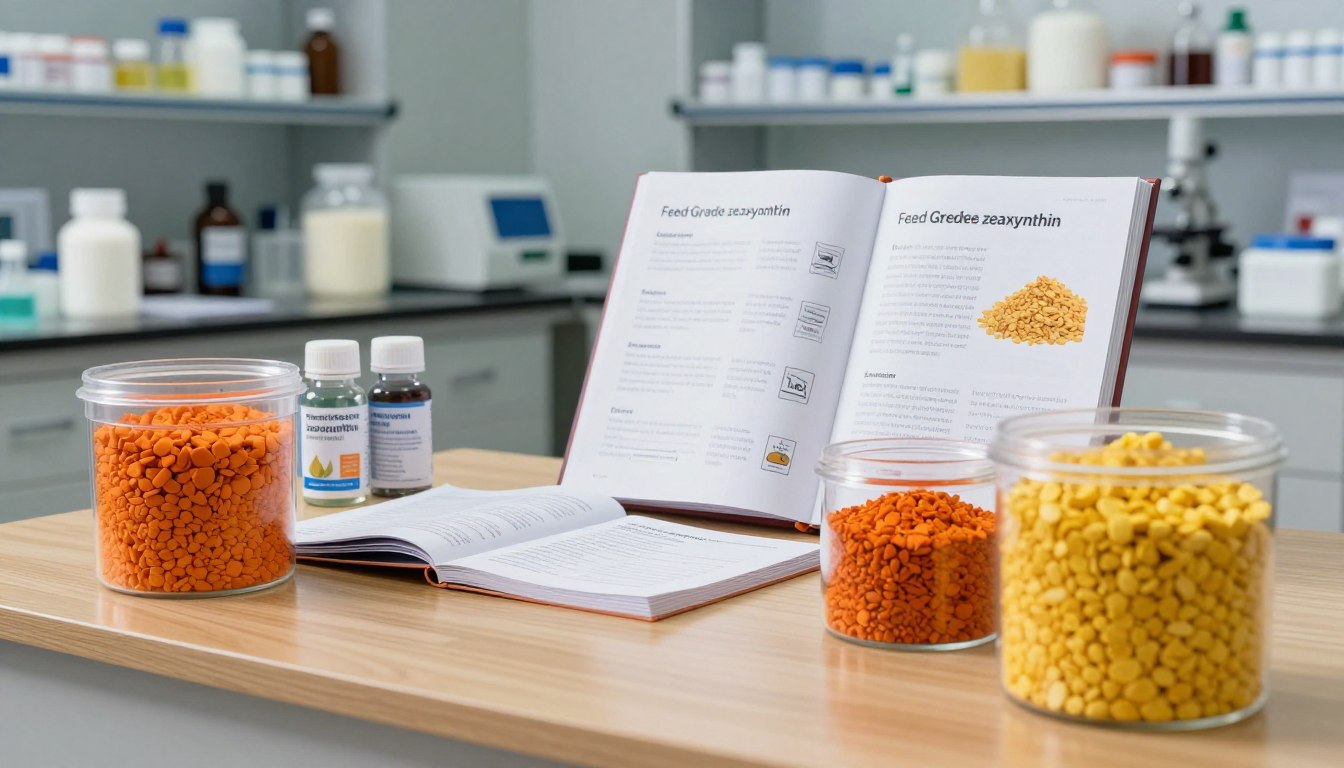
A well-organized display of various feed grade zeaxanthin supply options in a professional setting. In the foreground, clear containers filled with vibrant orange and yellow zeaxanthin granules, showcasing the product's quality. The middle ground features a wooden table with a catalog of suppliers open, highlighting different brands and packaging sizes, accompanied by small informative binders. The background includes a softly lit, high-tech laboratory with shelves stocked with raw materials and equipment emphasizing a focus on quality assurance. The atmosphere is informative and business-like, evoking professionalism and trust. The scene is captured with a slight depth of field using a standard 50mm lens, ensuring the focus is on the products while gently blurring the background to maintain clarity on the subject.
What to Look for in a Reliable Supplier
It doesn't matter if you buy directly or through a distributor. Finding a trustworthy supplier is crucial. Look for:
- The product's quality, like purity and concentration
- If it meets legal standards
- Good customer service and support
- Fair prices and payment terms
- How they handle delivery and logistics
By checking these things, you can get a steady supply of top-notch feed-grade zeaxanthin for your animals.
7. Conclusion
Feed-grade zeaxanthin is key for animal nutrition, offering many benefits. It helps improve egg yolk color in poultry and meat color in livestock. It also boosts antioxidant protection and supports the immune system.
Choosing the right zeaxanthin is important. We talked about purity levels, natural vs. synthetic sources, and what each species needs. For more on the market, check out the Feed Grade Zeaxanthin Market Report. It has info on the global market and big players like DSM, Kalsec Inc., and Kemin Industries.
Following dosage guidelines and getting zeaxanthin from trusted suppliers helps. As demand for quality zeaxanthin grows, understanding the market is crucial. This knowledge helps make better choices.
FAQ
Why is there such a growing importance of zeaxanthin in animal nutrition today?
Zeaxanthin's importance grows because it boosts both product quality and animal health. It's a carotenoid that does more than add color. It acts as a key antioxidant, helping to fight off free radicals. This supports the animal's immune system and ensures products like eggs and poultry look vibrant.
What are the primary benefits of feed grade zeaxanthin for poultry and livestock?
Feed grade zeaxanthin offers many benefits. For poultry, it ensures deep, rich egg yolk colors and healthy skin. It also provides antioxidant protection, improving meat shelf-life and supporting animal health and vision. It's a valuable tool for any farm.
How do we determine the correct zeaxanthin dosage for livestock?
Finding the right zeaxanthin dosage depends on the animal and your goals. For example, laying hens need different amounts than salmon. Start with guidelines from leaders like DSM Animal Nutrition and Health or Kemin. Then adjust based on the feed's bioavailability.
What are considered the best zeaxanthin sources for animal feed?
Natural zeaxanthin from Marigold flower extracts (Tagetes erecta) is often the best choice. It's known for its high bioavailability and is preferred for "natural" labels. Brands like OmniActive Health Technologies offer high-quality natural extracts for various feed types.
Where to buy feed grade zeaxanthin that we can trust for purity and safety?
Trustworthy zeaxanthin sources include reputable global manufacturers or certified distributors. Companies like BASF or ADM provide the necessary transparency and safety documentation. This ensures a clean supply chain.
Should we use specific feed additives with zeaxanthin for aquaculture?
Yes, specific feed additives with zeaxanthin are crucial for aquaculture. They help species like shrimp and salmon achieve natural, healthy pigmentation. This is essential for market quality.
What should be included in our quality assurance checklist for zeaxanthin?
Our checklist starts with a Certificate of Analysis (CoA). Look for verified purity, stability testing, and strict screening for contaminants. Regulatory compliance with the FDA or EFSA is also essential for protecting your livestock and reputation.
PHONE
EMAIL