English
Anhydrous Sodium Sulphite: Grade Details, COA Specs & Export Packaging
Created on 03.16
Welcome to our deep dive into a chemical key for many modern American industries. We're a trusted supplier of high-quality materials. We want to share our expertise with you. Knowing your ingredients is the first step to success.
This guide covers the technical details you need for daily operations. We'll look at purity levels, chemical standards, and logistics handling. Having clear specs makes your job easier and more efficient.
anhydrous sodium sulfite
We also explore our sodium sulfite anhydrous and its different grades. Our article covers COA data and packaging options like our standard 25 kg bags. We aim to provide a comprehensive guide for informed choices.
Need help with shipping or custom packaging? We have the right answers. Our experts have compiled this data to ensure you get the best from your orders. Let us guide you through the world of quality chemical sourcing.
Key Takeaways
- Detailed COA specifications for every product grade.
- High-purity options tailored for industrial manufacturing.
- Secure 25 kg bags for safe and easy handling.
- Efficient export loading with 27 MT per container.
- Trusted supplier support with OEM packaging availability.
Understanding Anhydrous Sodium Sulfite: Chemical Properties and Applications
Anhydrous sodium sulfite is key for many industries. We'll look at its chemical makeup and uses. It's used in many areas because of its special properties.
What Is Anhydrous Na2SO3?
Anhydrous sodium sulfite, or Na2SO3, is a white solid that dissolves well in water. It's widely used as a reducing agent in many processes. Unlike its hydrated forms, it doesn't have water in its structure. This makes it great for places where moisture is a problem.
Essential Chemical Properties of Sodium Sulfite Anhydrous
Anhydrous sodium sulfite has important properties for many uses. Some of these include:
- Reducing Agent: It can give electrons to other substances, reducing them.
- Solubility: It dissolves well in water, making it useful in solutions.
- Stability: It stays stable when stored properly, but can turn into sodium sulfate when exposed to air.
A highly detailed scientific illustration of anhydrous sodium sulfite in a laboratory setting. In the foreground, a close-up of crystalline anhydrous sodium sulfite, showcasing its distinctive white color and unique crystalline structure. The middle ground features glass beakers filled with solutions, reflecting its applications in various chemical processes. The background is a softly blurred lab environment with chemical equations and molecular structures subtly visible on chalkboards. Bright, focused lighting highlights the crystals while maintaining a cool, professional atmosphere. The composition should convey a sense of scientific rigor and clarity, ideal for educational purposes, with an emphasis on the chemical properties and applications of anhydrous sodium sulfite.
Common Uses of Anhydrous Sodium Sulfite Across Industries
Anhydrous sodium sulfite is used in many fields because of its versatility. Some of its main uses are:
- Water Treatment: It removes oxygen from water, preventing corrosion in boilers and other equipment.
- Photography: It's a preservative in photographic developers.
- Food Industry: It's used to preserve and protect food products.
- Pulp and Paper: It aids in the pulping process, breaking down wood.
Comprehensive Grade Details for Anhydrous Sodium Sulphite
Anhydrous sodium sulfite comes in different grades for various industries. Each grade has its own purity, chemical makeup, and use. This makes it perfect for many needs.
Industrial Grade Anhydrous Sodium Sulfite Specifications
Industrial grade anhydrous sodium sulfite is key in water treatment, paper making, and textiles. It meets certain standards:
- Purity: ≥ 95%
- Moisture content: ≤ 1%
- pH value (10% solution): 6.0-7.5
Our industrial grade meets tough industry standards. This ensures top performance and efficiency.
Food Grade Sodium Sulfite Anhydrous Requirements
Food grade sodium sulfite is a preservative and antioxidant in food. It must meet specific criteria:
Parameter | Specification |
Purity | ≥ 98% |
Heavy metals (as Pb) | ≤ 10 ppm |
Arsenic (as As) | ≤ 3 ppm |
A leading food safety expert says, "Food grade sodium sulfite is vital for food quality and safety."
"Sodium sulfite is crucial in the food industry. It preserves and prevents spoilage, extending shelf life."
Pharmaceutical and Technical Grade Standards
Pharmaceutical and technical grade anhydrous sodium sulfite are used for making medicines and technical products. These require higher purity and strict quality checks.
Pharmaceutical grade anhydrous sodium sulfite must have:
- Purity: ≥ 99%
- Heavy metals: ≤ 5 ppm
- Arsenic: ≤ 2 ppm
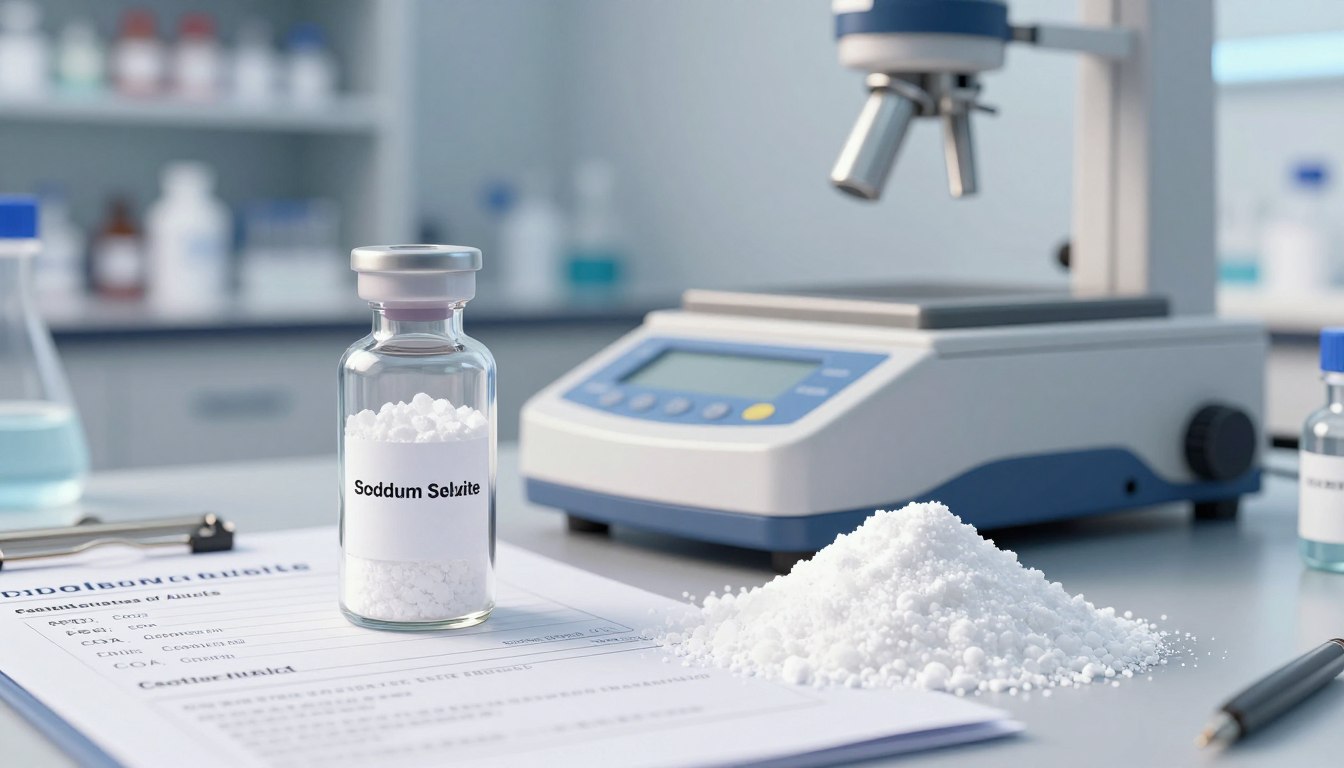
A highly detailed, professional illustration of anhydrous sodium sulfite, focusing on its grade specifications. In the foreground, a pristine laboratory setting showcases a glass vial filled with white crystalline powder of anhydrous sodium sulfite, alongside a lab-grade document detailing its technical specifications, such as purity and COA (Certificate of Analysis) details. In the middle ground, an analytical balance is elegantly arranged, emphasizing precision and professionalism. The background features blurred shelves housing various chemical compounds, softly lit to create a sterile atmosphere. Utilize soft, bright lighting to highlight the granules' texture and the clarity of the vial. A slight angle view captures a sense of depth, inviting viewers into the scene while maintaining a clean, educational feel.
Selecting the Right Grade for Your Application
Choosing the right anhydrous sodium sulfite grade depends on your needs. Consider purity, intended use, and industry standards.
Understanding different grades and their specifications helps you make an informed choice. This ensures optimal performance in your application.
Certificate of Analysis (COA) Specifications and Quality Standards
We are a trusted supplier of anhydrous sodium sulfite. We follow strict quality control, starting with a detailed Certificate of Analysis (COA). Our COA shows the quality and specifications of our anhydrous sodium sulfite. It ensures it meets standards for various uses.
Core COA Parameters We Test and Guarantee
Our COA covers key parameters tested and guaranteed. These are important for the product's quality. They help it fit different uses in industries, food, and medicine.
Purity and Assay Percentages
We ensure our anhydrous sodium sulfite is highly pure. The assay percentages meet or exceed international standards. Our product usually has a purity of 98% or higher, making it good for sensitive uses.
Heavy Metal Content Limits
We test our anhydrous sodium sulfite for heavy metals. We follow strict guidelines to keep heavy metals low. This ensures the product is safe for use.
pH Levels and Water Insoluble Matter
We monitor pH levels and water-insoluble matter closely. Our product has a stable pH level and little water-insoluble matter. This ensures it works well and stays stable.
Iron and Chloride Content
We also check for iron and chloride content. Low levels of iron and chloride are key for maintaining quality and performance.
Our Quality Control and Testing Procedures
Our quality control process is thorough. We use state-of-the-art equipment and techniques to ensure our anhydrous sodium sulfite is top quality.
- Regular sampling and testing during production
- Use of calibrated equipment for accurate measurements
- Trained personnel for handling and testing the product
International Compliance and Certifications
We are a reputable supplier of anhydrous sodium sulfite. We follow international regulations and have relevant certifications. Our product meets ISO standards and complies with food and pharmaceutical grade requirements.
- ISO certification for quality management
- Compliance with food grade standards for safety
- Adherence to pharmaceutical grade specifications for purity and efficacy
Export Packaging Standards and Shipping Solutions
Exporting anhydrous sodium sulfite requires careful packaging for safe transport and storage. At our company, we focus on the quality and safety of our product during shipping.
Packaging Options
We have different packaging options to meet various customer needs. Our standard packaging includes:
- Reliable and durable materials to protect the product during transit
- Customizable packaging solutions to meet specific customer requirements
25kg Multi-Wall Paper Bags with PE Liner
Our 25kg multi-wall paper bags with PE liner are designed for safe transport of anhydrous sodium sulfite. These bags are:
- Made from high-quality, moisture-resistant materials
- Equipped with a PE liner to prevent moisture ingress
1000kg Jumbo Bags (FIBC) for Bulk Orders
For bulk orders, we offer 1000kg jumbo bags (FIBC) that are:
- Designed for safe handling and transportation of large quantities
- Made from durable, woven polypropylene materials
Export-Ready Palletization and Container Loading
To ensure secure transport, we palletize our anhydrous sodium sulfite bags and load them into containers. Our palletization process involves:
- Stacking bags on pallets to prevent damage and facilitate handling
- Securing pallets with straps or wraps to prevent shifting during transit
We carefully load the palletized bags into shipping containers to maximize space and minimize damage risk.
Storage Requirements and Shelf Life Considerations
Proper storage is key to maintaining anhydrous sodium sulfite quality. We recommend:
- Storing the product in a cool, dry, well-ventilated area
- Avoiding exposure to moisture, heat, and direct sunlight
With proper storage, anhydrous sodium sulfite has a long shelf life. If you're looking to buy anhydrous sodium sulfite, our product is packaged and shipped with care to ensure it reaches you in optimal condition.
Conclusion
Anhydrous sodium sulfite is a versatile compound used in many industries. Its unique properties make it crucial in food preservation and industrial processes.
We've talked about the different grades, Certificate of Analysis (COA) specs, and export packaging for anhydrous sodium sulfite. This knowledge helps customers choose the right product for their needs.
Our company is dedicated to providing top-quality anhydrous sodium sulfite. We follow strict quality control and international standards. This ensures our products meet customer expectations.
Choosing us as your supplier means you get our expertise and commitment to your needs. We're excited to serve you with our premium products.
FAQ
What exactly is anhydrous sodium sulfite and how is it used?
Anhydrous sodium sulfite is a white, crystalline powder. It's a strong antioxidant and reducing agent. It's used in the pulp and paper industry for bleaching. It's also used in water treatment and in textiles to remove chlorine after bleaching.
What are the most important anhydrous sodium sulfite chemical properties to consider?
Sodium sulfite anhydrous is very soluble in water but not in ethanol. It's a strong reducing agent. It reacts with oxygen to form sodium sulfate. This makes it useful for protecting industrial boilers and preserving photographic developer solutions.
Can you explain the different uses of anhydrous sodium sulfite across various grades?
Yes! We offer different grades for different needs. Our industrial grade is great for tanning extracts and ore flotation. Our food grade is safe for preserving dried fruits and wine. We also have pharmaceutical and technical grades for lab and medical use.
What should I look for in a Certificate of Analysis (COA) when I buy anhydrous sodium sulfite?
A good COA shows purity and assay percentages, heavy metal content, and more. We use Mettler Toledo titrators to test our sodium sulfite. This ensures it meets international standards.
How do you package anhydrous sodium sulphite for international shipping?
We package it carefully for safe transport. We use 25kg paper bags or 1000kg FIBC bags. All shipments are palletized and secured for long-distance transport.
What is the recommended way to store sodium sulfite anhydrous to maximize its shelf life?
Store it in a cool, dry place. Keep bags sealed to prevent oxidation. Following these steps ensures a shelf life of at least two years.
PHONE
EMAIL
WhatsApp